AA's Popular Posts

Monday, June 13, 2011

Casey Anthony's trial is one hot ticket

Casey Anthony's trial is one hot ticket
By Ann O'Neill

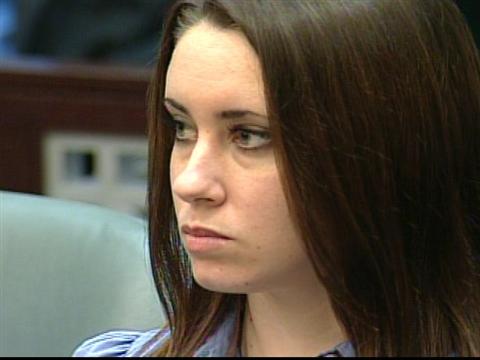
Casey Anthony, also known as the "tot mom," is no Lady Gaga, but her murder trial here is the hottest ticket in town.

People spend the night waiting in line for one of 50 courtroom seats reserved for the public. Tempers flare and police are called. And then, once they're given a ticket, they stampede like cattle.

Only in Florida, where criminal justice can be a spectator sport, are Disney World passes the back-up option.

Anthony, a 25-year-old high school dropout, is accused of capital murder in the death of her 2-year-old daughter, Caylee. If convicted of murder, she faces the death penalty.

What's the big draw?

"Lie after lie," says one trial watcher. "I can't imagine the grief that family has gone through," says another. "I'm here for Caylee," says yet another. "I'm waiting for Casey to step up and tell us what happened."

If the first two weeks of the trial focused on family ties, secrets and lies, the third week was all about the forensics. The case is at its most gruesome stage as jurors and spectators hear how duct tape was placed over Caylee's nose and mouth and that animals gnawed on her tiny bones. She was wearing a T-shirt that said "Big trouble comes in small packages," and was buried in a trash bag in a lot not far from her grandparents' home.


Anthony trial spectators turn testy
Casey Anthony trial: Week 3
Anthony cries during forensics testimony
Pathologist testifies about duct tape

Week 3: "Chloroform" searches and images of Caylee's body

The bug expert was the top attraction on Saturday -- Day 16. It was, as one trial watcher in line observed, like "'Law & Order' meets 'CSI.'" Competition for seats was more fierce than ever.

As the lines swell and emotions flare, keeping the peace is a challenge. On Friday, paramedics carted a woman away on a stretcher after a confrontation with a trio of would-be line jumpers.

And so, red and blue police lights flashed in the humid, predawn darkness Saturday as the line in front of the Orange County Courthouse grew to 100 strong. Courthouse security officers, Orange County sheriff's deputies and Orlando city police were out in force and people in line were cautioned that anyone who caused trouble would lose their spot. Anyone who stampeded would be arrested.

In Session: Conflict ensues among hopeful spectators at Casey Anthony trial

The trial is held on the 23rd floor, a penthouse built specially for high-profile trials. But it has been years since a trial has packed them in like the Anthony case. Even Judge Belvin Perry makes comparisons to the O.J. Simpson trial.

Saturday's spectators did a good job of policing themselves as they waited for the numbered tickets handed out each morning. Snagging one requires extreme dedication, a good lawn chair and a bladder of steel. Some people have waited in line all night, only to get kicked out of court for violating the rule against snoozing.

Troy Mitchell, 41, of Denver, Colorado, started camping out in front of the courthouse at 10:30 p.m. Friday and got the No. 1 ticket. He says adrenaline kept him awake, and he confides that he has driven by the Anthony house. He also has been to the former home of another child whose mysterious death still occasionally makes headlines 14 years later -- JonBenet Ramsey, who lived in Boulder, Colorado.

Don and Marianne Acebedo of Sacramento, California, joined Mitchell at 11 p.m. and soon after came the Florida contingent, which included Amber Block and Megan and Kathi Jennings.

Spend eight or nine hours in line with other people and a sense of community grows. People give their neighbors nicknames, usually based on a hometown or number in line. As they discuss the case in minute detail, they give the lawyers nicknames, too: Bozo, Colonel Sanders and Barbra Streisand are a few examples.

"Is Nancy here? Do you know Nancy?" several people in line asked. Almost everyone in Saturday's line said they followed the case on "Nancy Grace," a legal affairs show on CNN's sister network, HLN. But not everyone.

"I don't know who Nancy Grace is," said one woman, who declined to give her name or line number. Her neighbor, No. 64, set her straight, holding up a printout copy of Grace's publicity photo.

"I am going to go Google Nancy Grace," the anonymous trial watcher said.

(Check out Nancy Grace's blog)

Breakfast orders were taken as the sun came up, and a burrito was tossed down the line. The group raised $70 for a woman whose car was towed because of an unscrupulous parking lot attendant.

Everyone in the top 10 had arrived by 2 a.m. but even before the sun came up, it was clear that half the people in line might not make it inside.

"I was part of the mad stampede," Kathi Jennings said, explaining that she was there the day a woman was trampled by spectators running across the street and down the hallways.

This time, she brought a Sharpie marker and suggested people write numbers on their hands. "Look guys, have you been here before?" she asked the others. "It's going to get bad."

Soon she was nicknamed "the Sharpie lady" as the others agreed to her system. By 4:30 a.m., Jennings had numbered the hands of 50 people. Fifteen minutes later, things got heated when Tracy Bucciarelli, of Chicago, arrived and took exception to the Sharpie system.

"Those aren't the rules on the Internet," she protested, trying to start her own "official" line, according to the others.

"She was causing a commotion. I don't know where she got her sense of entitlement," said Julie Jones, who identified herself as "No. 38 and proud."

The fifth person in line, Becky Davis, of Orlando, says she turned to the interloper and scolded, "God doesn't like nasty."

No. 13, who spells her name Joe.C Castillo, dialed 911 as more people protested and more heated words were exchanged. Castillo, a dark-haired woman with a strong New York accent, also was behind the fundraiser for the woman whose car was towed.

"Got a dollar?" she asked each person as she cruised the line. Later, she confided that Bucciarelli had chipped in, adding, "Maybe she's not such a crackerjack."

Friday, June 10, 2011

Jessica Studebaker Is Not Real


Angela Voelkert Uses Fake Teen Facebook Profile To Trick Ex, Uncover Murder Plot: REPORT

Dean Praetorius


Angela Voelkert thought she could get a little dirt on her husband using a fake Facebook profile. She uncovered something far more sinister, say authorities.
The 29-year-old Indiana woman created a faux Facebook account that appeared to belong to a teenage girl. Using the the profile, she began conversing with her soon-to-be ex-husband, who seemed more than ready to put an end to an already messy divorce. According to the New York Post, David, 38, allegedly confessed through Facebook that he had not only planted a GPS tracking device on his wife's van, but was using it to pinpoint the perfect location where he would have her killed.
"I am going to find someone to take care of her and now it will be easier because I know where she is at all times," he allegedly wrote.
He reportedly ask the "girl" on Facebook if she'd knew any "gang-bangers" at her school that would do the job for $10,000, according to the Post.
Fox News reported that the identity of the girl Voelkert used for the profile picture, and from where she obtained the the photo, is unknown.
"Once she is gone, I don't have to hide with my kids," Voelkert's husband wrote, according to court papers. "I can do what I want and not have to worry about not seeing my family anymore. You should find someone at your school. There should be some gang-bangers there that would put a cap in her ass for $10,000. I am done with her crap!"
This is the second murder attempt that seems to have been uncovered using Facebook in the past two days.
UPDATE: It seems David has been released from custody after proving he knew the profile was his ex-wife, reports the Smoking Gun.
To support this contention, Voelkert provided FBI agents with a May 25 notarized affidavit in which he describes receiving a friend request from “Jessica Studebaker,” whom he suspected was his ex-wife. “I am lying to this person,” he stated, “to gain positive proof that it is indeed my ex-wife trying to again tamper in my life.” He added, “In no way do I have plans to leave with my children or do any harm to Angela Dawn Voelkert or anyone else.”
The allegedly incriminating Facebook messages sent by Voelkert came on May 31, six days after his sworn affidavit was notarized. Voelkert kept one copy of the affidavit, and gave a relative a second copy for safekeeping.

Tuesday, June 7, 2011

Ex-boyfriend puts up abortion billboard about Ex-girlfriend

Ex-boyfriend puts up abortion billboard about Ex-girlfriend


A New Mexico man's decision to lash out with a billboard ad saying his ex-girlfriend had an abortion against his wishes has touched off a legal debate over free speech and privacy rights.
The sign on Alamogordo's main thoroughfare shows 35-year-old Greg Fultz holding the outline of an infant. The text reads, "This Would Have Been A Picture Of My 2-Month Old Baby If The Mother Had Decided To Not KILL Our Child!"
Fultz's ex-girlfriend has taken him to court for harassment and violation of privacy. A domestic court official has recommended the billboard be removed.
But Fultz's attorney argues the order violates his client's free speech rights.
"As distasteful and offensive as the sign may be to some, for over 200 years in this country the First Amendment protects distasteful and offensive speech," Todd Holmes said.
The woman's friends say she had a miscarriage, not an abortion, according to a report in the Albuquerque Journal.
Holmes disputes that, saying his case is based on the accuracy of his client's statement.
"My argument is: What Fultz said is the truth," Holmes said.
The woman's lawyer said she had not discussed the pregnancy with her client. But for Ellen Jessen, whether her client had a miscarriage or an abortion is not the point. The central issue is her client's privacy and the fact that the billboard has caused severe emotional distress, Jessen said.
"Her private life is not a matter of public interest," she told the Alamogordo Daily News.
Jessen says her client's ex-boyfriend has crossed the line.
"Nobody is stopping him from talking about father's rights. ... but a person can't invade someone's private life."
For his part, Holmes invoked the U.S. Supreme Court decision from earlier this year concerning the Westboro Baptist Church, which is known for its anti-gay protests at military funerals and other high-profile events. He believes the high court's decision to allow the protests, as hurtful as they are, is grounds for his client to put up the abortion billboard.
"Very unpopular offensive speech," he told the Alamogordo Daily News. "The Supreme Court, in an 8 to 1 decision, said that is protected speech."
Holmes says he is going to fight the order to remove the billboard through a District Court appeal.

Thursday, June 2, 2011

Is sharing your Netflix password like stealing cable?

A new Tennessee law will expand cable stealing to include Internet entertainment services like Netflix and Rhapsody. Should government spend its time doing what these entertainment companies could do themselves?
Is sharing your Netflix password like stealing cable?

By: Jeffrey Van Camp 


Tennessee lawmakers think that sharing a Netflix password is like stealing cable. Today, lawmakers in the state passed a new measure that criminalizes using a friend’s login for entertainment services like Netflix, Hulu Plus, or Rhapsody. All the bill needs now is the governor’s signature, and the AP reports that Gov. Bill Haslam is expected to sign the bill.
“I don’t know enough about that legislation, but if it’s combating that issue [music piracy], I would be in favor of it,” Haslam said. The RIAA and recording industry have a strong presence in Nashville.
Once signed, if you are caught using an entertainment service that is not under your name, you could be heavily fined, charged with a misdemeanor and sent to jail, or charged with a felony, even if the password was given to you willingly. That’s right, a felony. While the legislation is mainly aimed at those who sell passwords in bulk, the bills sponsors admit that its language is so vague that it could be used to target small offenders like friends who share passwords or groups of kids in college dorm rooms.
“What becomes not legal is if you send your user name and password to all your friends so they can get free subscriptions,” said the bill’s House sponsor, Rep. Gerald McCormick.
All it takes is a call from one of these services and you could be charged with a felony. The legislation was lobbied by the music recording industry and is a sort of 21st century addition to the cable stealing laws that exist today. It adds “entertainment subscription service” to the list of services protected by law. The question is, do services like Netflix or Rhapsody need laws like this to protect them?

Stealing cable

While I am no expert on the subject, detecting cable theft was not an easy task back when these laws were first implemented. Feasibly, someone could buy a splitter and share his or her connection with a neighbor or an apartment complex could wire its tenants up for a while without being noticed. Black boxes, which descramble television signals without authorization, are another way to accomplish theft (or willing sharing) of a neighbor’s service. The most common ways cable thieves and sharers have been identified are through technicians noticing the hookup or a neighbor reporting the problem or poor service. More sophisticated, remote means of detection do exist.
A Massachusetts cable theft document explains some of the reasons this legislation was enacted, most of which sound like a lobbying effort by the cable industry: “added service calls, additional system maintenance and lost revenue can increase everyone’s cable rates. Indeed, theft of cable service costs the cable industry an estimated 5.1 billion dollars per year! This increases the cable operator’s cost of doing business and may increase your rates. Consequently, the honest customer ends up paying for those who illegally receive services for free.”
$5.1 billion dollars per year is, of course, a number that the cable industry came up with, but theft of things like cable is impossible to accurately put into dollars. We would have to know how many of those stealing their cable would actually purchase it if they weren’t sharing or stealing. Still, some money has likely been lost due to cable thieves and overly-friendly neighbors.

Sharing Netflix and other passworded services

So what is so different about sharing Netflix, Rhapsody, and other “entertainment services” passwords? Well, unlike cable companies back in the day (they may be able to detect theft better now that cable is digital), entertainment services like Netflix know exactly when you log into their Internet service, what you watch and listen to, who your ISP is, and when you log off, among other things. They know what device you’re logged into and they know when you log in from two or more accounts simultaneously. In the case of Netflix specifically, it allows users to log in and watch from a myriad of devices, many of which are mobile. However, it also limits usage where it deems necessary.
I have firsthand experience with this. When I moved several hours away from a former roommate late last year, I still had his Netflix account connected to my Nintendo Wii. However, due to inter-device policy or our physical distance, Netflix limited usage of my former roommate’s Xbox and my Wii to one device at a time. If I started watching a show, it would kick him off. Likewise, if he began watching a show, I would be kicked off the service. This is one example of an entertainment services company dealing with these problems itself. With no law on the books, Netflix has kindly persuaded me to pay for my own streaming account; however, under a law like this, I would not be paying Netflix $8 a month and I could be in jail.
If any entertainment services company believes a customer is stealing or abusing its service, then that action is almost certainly a breach of the “terms and conditions” that customer agreed to when he or she signed up. Why can’t Rhapsody or Netflix simply warn and boot off offending users on their own? They have the power to remove access to those stealing or leeching service as well by requiring a user to change his or her password or forcing a user onto a “family plan” of sorts.

What else should be illegal?

If state, local, or federal governments would like to continue wasting our tax dollars on frivolous items industries should deal with themselves, I have a few more suggestions for them.
Smartphone tethering: Tethering your smartphone to your computer to share your Internet connection without paying your wireless carrier an extra $10 bucks isn’t illegal, but it could be! Verizon and AT&T are already dealing with this issue by sending warnings to users and charging them extra for tethering, but why make them do the hard work? Just have them call up law enforcement with a list of 25,000 names. The law can deal with it for them.
Sneaking into a movie: Every movie you sneak into is potential lost revenue for the theater, and technically, it is already illegal. While most theaters post ticket takers and guards, removing offending “trespassers” themselves, why force the theater to do this? Instead, the police should have separate units assigned to guard movie theaters from cheapsters. Almost everyone has sneaked into a movie at least once. They should all be in jail, right?
Making a mix CD for a friend: Now, this is pretty 90s, I know, but why didn’t the government get more involved in the dark art of mixes? After all, the RIAA has certainly shown that it doesn’t want friends to share music with their friends. While we argue that things like sharing and making mixes could promote more music interest from all parties involved–which would result in future album purchases and possibly lead to a myriad of related sales opportunities, including concerts–it isn’t up to us. If we’re to only focus on the negative impacts of music and file sharing, then a big government crackdown on blank CDs should have happened a while ago.

Enough already

The U.S. federal government has a lot on its plate already and State governments are failing to meet their budgets by the dozen. Why are we pandering to fears by a few lobbying industries over issues that appear to be fairly easy for entertainment services companies to take care of themselves? Cable theft and Internet services are two different beasts, but neither need government regulation. Users pay for these services. If Comcast or Netflix deem them bad customers, then they are welcome to kick them off. It doesn’t need it to be a felony.

(We contacted Netflix with several questions about how they handle issues like these, but did not receive a response by press time.)

Wednesday, June 1, 2011

Florida to test all welfare recipients for drugs

Florida to test all welfare recipients for drugs
By Michael Peltier

Florida will begin testing welfare recipients for illicit drug use under a new law signed by Governor Rick Scott on Tuesday.

The measure makes Florida the only state to test all recipients of the federal program known as Temporary Assistance to Needy Families, according a Washington-based public policy group that says other states have chosen less obtrusive ways to monitor drug use.

The new law, a version of which was struck down by a federal court in Michigan in 2003, requires recipients to pay for the tests before qualifying for benefits and periodically after they receive them.

The law was one of Scott's campaign promises. Supporters say it will help ensure that taxpayer money is used to get families on their feet and not to fuel drug habits at state expense.

"While there are certainly legitimate needs for public assistance, it is unfair for Florida taxpayers to subsidize drug addiction," Scott said in a statement released after he signed the bill during a visit to Panama City.

"This new law will encourage personal accountability and will help to prevent the misuse of tax dollars."

Beginning July 1, recipients who test positive for drugs would be denied benefits for a year. A second failed test would result in a three-year ban.

In two-parent households, both adults would be tested. Benefits to children could be awarded to a third-party recipient, who must also pass a drug screen.

The law will not affect the federal food stamp program.

Critics, including the American Civil Liberties Union of Florida and Florida Legal Services, said they will decide in coming weeks if they plan to file suit against the law on the grounds that blanket drug tests are unconstitutional.

Federal law allows states to screen for drug use under the TANF program, which provides a maximum $300 a month cash assistance to needy families. The program, which replaced traditional welfare in the mid 1990s, has a 48-month lifetime cap on benefits.

Other states have studied the issue and decided testing all recipients was not cost effective, the Washington-based Center for Legal and Social Policy said in a study released in January.

Most states have drug assessment programs that do not include urine or blood tests. Some require drug tests from recipients who have been convicted of felony drug crimes.

During debate about the law, critics pointed to a pilot testing program in Florida that was shut down in 2001 after it showed no significant difference in drug use between welfare recipients and the population at large.

"The wasteful program created by this law subjects Floridians who are impacted by the economic downturn, as well as their families, to a humiliating search of their urine and body fluids without cause or even suspicion of drug abuse," said Howard Simon, executive director of ACLU Florida, in a statement.

Tuesday, May 31, 2011

New law on crack cocaine could apply to old cases

New law on crack cocaine could apply to old cases

A year ago, a drug dealer caught with 50 grams of crack cocaine faced a mandatory 10 years in federal prison. Today, new sentencing rules cut that to as little as five years, and thousands of inmates not covered by the change are trying to get it applied to old cases.

"Please make this situation fair to all of us," prisoner Shauna Barry-Scott wrote from West Virginia to the U.S. Sentencing Commission, which oversees federal sentencing guidelines. "Treat us the same."

The commission meets Wednesday in Washington to consider making many of the new guidelines retroactive, a step that could bring early release for as many as 1 in every 18 federal prisoners, or approximately 12,000 inmates.

The commission has already received more than 37,000 letters on the issue, most from inmates and their families and friends. Many of the letters are form letters drafted by interest groups such as Families Against Mandatory Minimums, but others contain personal pleas. A woman from New York wrote to say her nephew should be "given another chance at society." A mother from Illinois said her child was sentenced "very harshly."

Prisoners have also been writing judges and public defenders, asking if the new law might help them.

"Dear Judge Blake, I am forwarding this letter to you for your assistance that concerns the new crack cocaine law that was just passed," Steven Harris wrote to a federal judge in Maryland, asking about his 10-year sentence for crack possession and possession of a firearm during the crime. "I would like to know if this law will help me."

Congress and President Barack Obama agreed in August to reduce the minimum penalties for crack. But the law did not apply to prisoners who were locked up before the change.

Michael Nachmanoff, the lead public defender in the eastern district of Virginia, where about 1,000 prisoners would be affected, the most of any area in the country, says his office has been getting about a half-dozen calls or letters a month.

Nachmanoff, who will testify before the commission Wednesday, says his office is prepared to act if the commission makes changes. And he says anyone who worries that retroactivity would be going light on offenders is wrong.

"All of these people will wind up serving long sentences," he said. "This is really about fixing a really unfair problem that now everybody recognizes was wrong."

Since the 1990s, advocates have complained that crack offenders are treated more harshly than those arrested with powdered cocaine. Many critics view the disparity as racial discrimination because black drug offenders are more likely to be charged with federal crack offenses and to serve longer prison terms than other offenders.

The Fair Sentencing Act, signed by Obama in August, attempts to remedy that disparity by changing the amount of crack cocaine required to trigger five and 10-year mandatory sentences.

Before the law was passed, a person convicted of possessing 5 grams of crack cocaine — about the weight of five packets of Sweet'n Low — automatically got sentenced to five years. Now it takes 28 grams to trigger a five-year mandatory sentence, an amount more in line with powdered cocaine. Possessing 280 grams of crack triggers a 10-year sentence as opposed to the old standard of 50 grams — about the same weight as 10 nickels.

Inmates who received the mandatory minimum sentence under the old system will not be eligible for early release because only Congress can make minimum sentences retroactive. But inmates who received above the minimum could see their sentences reduced, and others whose offense did not rise to the level of a mandatory minimum could be eligible for earlier release, too.

The commission estimates that the average sentence reduction for applicable inmates would be approximately three years.

Not everyone supports the proposal for retroactivity. The Fraternal Order of Police opposed the law Obama signed and plans to oppose retroactivity before the commission, arguing criminals were aware of the penalties for their actions.

"They knew what they were doing. They went into it with their eyes open," Jim Pasco, executive director of the Fraternal Order of Police, which represents more than 300,000 law enforcement officers.

Prisoners charged with crack offenses have already had one recent experience with retroactive sentence reductions. In 2007, the commission revised the crack sentencing guidelines, reducing sentences by an average of two years. Approximately 16,000 offenders had their sentences reduced.

For the change to be made retroactive, four members of the six-member commission would have to vote to support the idea. If that happens, Congress could still reject or modify the guidelines until the end of October.

Given that the Fair Sentencing Act passed Congress almost unanimously and that the commission has acted previously to make sentencing changes retroactive, Marc Mauer of the Washington-based Sentencing Project said he is cautiously optimistic that the proposal for retroactivity will be adopted.

The commission is expected to rule in the next few months, but that ruling can't come soon enough for some prisoners.

"I love and miss my children very much," inmate Samuel Tirado wrote to the commission from his New Jersey penitentiary. "And I hope to be reunited with them sooner than 2022."


Monday, May 30, 2011

AMERICAN ATTORNEY OBSERVES MEMORIAL DAY


Today, we observe and pay tribute to those that have fallen and those still standing in bravery for our country. 

We Thank, Love, and Honor You. 

God Bless All.

-American Attorney Team

Friday, May 27, 2011

Family Gets $58 Million In Record-Breaking Malpractice Suit

Family Gets $58 Million In Record-Breaking Malpractice Suit


In what is being called the largest medical malpractice verdict in state history, two Connecticut parents have been awarded $58 million on behalf of their eight-year-old son, reports ABC 7's Eyewitness News.
Attorneys for the family say that Daniel D'Attilo now has cerebral palsy because of brain damage resulting from a delayed delivery by their obstetrician. "It's an overwhelming victory for the parents," one of the family's lawyers, Kathleen Nastri, told the Associated Press. "He is profoundly, profoundly disabled and the parents have gone through hell."
The case was filed in 2005, after Daniel's birth on February 2, 2003, reports the Connecticut Post. According to attorneys, Cathy D'Atillo's amniotic fluid dropped by half on January 31, but her physician waited days to perform a Caesarian section -- they also say that even once the surgery did happen, it was done improperly.
According to the NIH, "Cerebral palsy is caused by injuries or abnormalities of the brain" that typically occur in the womb. While symptoms can range from mild to very severe, in Daniel's case he is unable to speak, eat or walk, and suffers from seizures.
Of the record dollar amount granted by the jury, $8 million is expected to cover medical expenses, while the remainder was designated for pain and suffering.
"The dollar amount means he will be taken care of, that's what this means to us," Daniel's mother Cathy told the Eyewitness team, who also reports that her son will need full-time care.
But the doctor's attorney, James Rosenblum said to the Associated Press that the jury's decision was made more out of sympathy than hard evidence -- he promised that his client would appeal the case. "His treatment was impeccable. It's a shocking verdict," he said.

Wednesday, May 25, 2011

Teacher Arrested for Allegedly Chloroforming Students

Teacher Arrested for Allegedly Chloroforming Students
By Lisa Johnson Mandell

Regardless of how "energetic" some kids may be, it should be a no-brainer for a teacher to realize that it's not OK to give chloroform to your students. Authorities believe that a chemistry teacher at Livingston High School in the Merced, Calif., area was trying to help students get high when she aided them in inhaling chloroform.

Chemistry teacher Japhia Smith Huhndorf, 34, of nearby Atwater, was arrested on Monday for allegedly helping three male students, 16, 17 and 18 years old, ingest the chemical by inhaling it from a towel. Chloroform is used in schools to preserve tissue, but elsewhere it can be used as an anesthetic.
It was no surprise that she was arrested on suspicion of three counts of felony child endangerment for this particular incident, but what did come as a shock was what Sgt. Ray Fong of the Livingston Police Department told the Merced Sun Star: There were at least three similar incidents involving Huhndorf over the past five months.
Both students and parents told reporters that they were shocked to hear that Huhndorf had acted this way. Apparently, she was a very popular staff member and the label on her picture in the school yearbook shows that she was voted the "Most Spirited Teacher." Now, perhaps, we know why.

Tuesday, May 24, 2011

State Legalizes Gold as Currency


Utah Legalizes Gold, Silver Coins As Currency

SALT LAKE CITY -- Utah legislators want to see the dollar regain its former glory, back to the days when one could literally bank on it being "as good as gold."
To make that point, they've turned it around, and made gold as good as cash. Utah became the first state in the country this month to legalize gold and silver coins as currency. The law also will exempt the sale of the coins from state capital gains taxes.
Craig Franco hopes to cash in on it with his Utah Gold and Silver Depository, and he thinks others will soon follow.
The idea is simple: Store your gold and silver coins in a vault, and Franco issues a debit-like card to make purchases backed by your holdings.
He plans to open for business June 1, likely the first of its kind in the country.
"Because we're dealing with something so forward thinking, I expect a wait-and-see attitude," Franco said. "Once the depository is executed and transactions can occur, then I think people will move into the marketplace."
The idea was spawned by Republican state Rep. Brad Galvez, who sponsored the bill largely to serve as a protest against Federal Reserve monetary policy. Galvez says Americans are losing faith in the dollar. If you're mad about government debt, ditch the cash. Spend your gold and silver, he says.
His idea isn't to return to the gold standard, when the dollar was backed by gold instead of government goodwill. Instead, he just wanted to create options for consumers.
"We're too far down the road to go back to the gold standard," Galvez said. "This will move us toward an alternative currency."
Earlier this month, Minnesota took a step closer to joining Utah in making gold and silver legal tender. A Republican lawmaker there introduced a bill that sets up a special committee to explore the option. North Carolina, Idaho and at least nine other states also have similar bills drafted.
At the moment, Franco's idea would generally be the only practical use of the law in Utah, given the legislation doesn't require merchants to accept the coins, either at face value – $50 for a 1-ounce gold coin – or market value, currently almost $1,500 per ounce. And no one expects people will be walking around town with pockets full of gold and silver.
Matt Zeman, market strategist for Kingsview Financial in Chicago, expects more people will start investing in gold as America's growing debt and bankruptcies in other countries continue to decrease the value of government-backed money.
"You've seen gold replacing these currencies as safety instruments," Zeman said. "If I don't feel good about the dollar or other currencies, I'm putting my money in precious metals."
Some supporters, including the law's sponsor, seek to push Congress toward removing the tax burdens that discourage use of the coins, such as a federal capital gains tax.
"Making gold and silver coins legal tender sends a strong signal to Congress and the Federal Reserve that their monetary policy is failing," said Ralph Danker, project director for economics at the Washington, D.C.-based American Principles in Action, which helped shape Utah's law. "The dollar should be backed by gold and silver, so we have hard money."
The U.S. and many other countries largely abandoned gold-backed money during World War I because they needed to print more cash to pay for the war. Later, during the Great Depression, President Franklin D. Roosevelt took steps that essentially prohibited gold and silver as legal currency to prevent hoarding.
In 1971, President Nixon formally abandoned the gold standard.
Fifteen years later, the U.S. Mint began producing the gold and silver American Eagle coins, primarily aimed at investment portfolios and allowing people to trade them at market value but with capital gains taxes on profits.
Utah is now allowing the coins to be used as legal tender while levying no taxes.
Opponents of the law warn such a policy shift nationwide could increase the prospect of inflation and could destabilize international markets by removing the government's flexibility to quickly adjust currency prices.
"We'd be going backward in financial development," said Carlos Sanchez, director of Commodities Management for The CPM Group in New York. "What backs currency is confidence in a government's ability to pay debt, its government system and its economy."
Larry Hilton, a Utah attorney who helped draft the law, disagrees and says the gold standard would restore faith in American money at a time when spiraling debt is weakening confidence.
"We view this as a dollar-friendly measure," Hilton said. "It will strengthen the dollar by refocusing policy matters in Washington on what led to the phrase, `the dollar is as good as gold.'"